 Experts You Can Trust
Medically Reviewed by Dr. Sukhbir Singh
Hair loss affects millions of people worldwide and can significantly impact confidence and self-esteem. Factors such as genetics, hormonal changes, stress, aging, and medical conditions often contribute to thinning hair and baldness.
Fortunately, modern hair restoration treatments offer effective solutions for restoring a fuller appearance. Among the most popular options are hair transplants and hair patches. While both treatments aim to address hair loss, they differ considerably in terms of procedure, maintenance, longevity, and results.
Understanding the differences between hair transplant vs hair patch is essential for choosing the right solution that aligns with your hair restoration goals and lifestyle preferences.
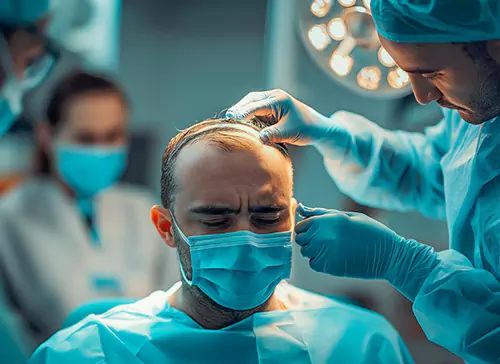
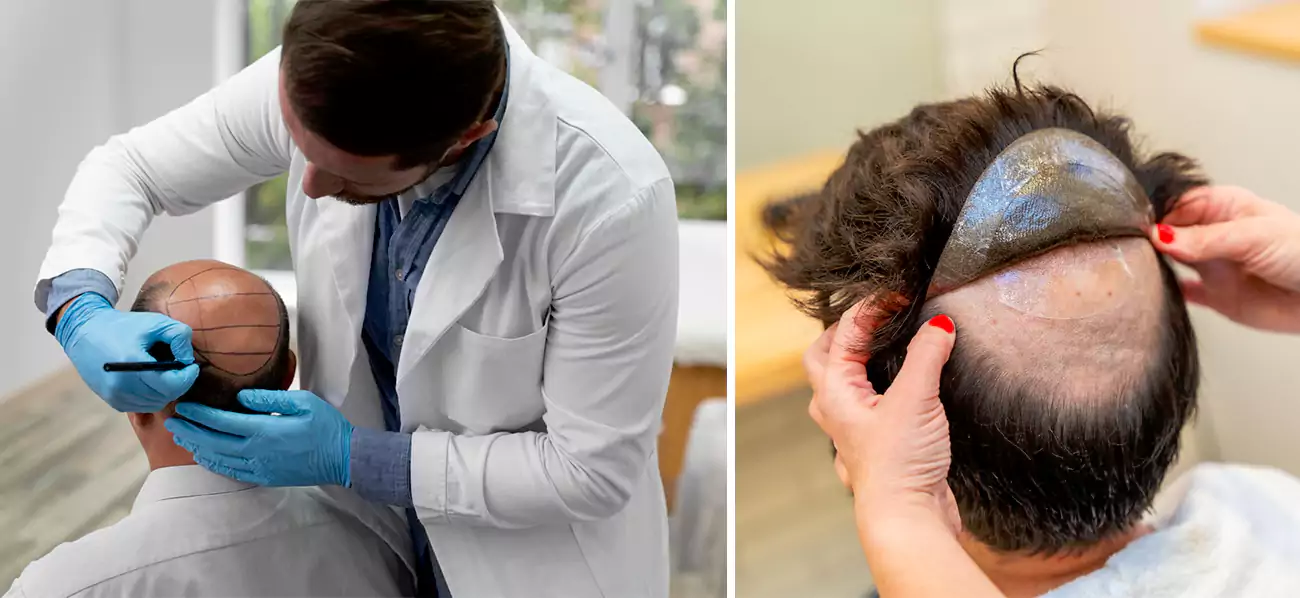
A hair transplant is a minimally invasive surgical procedure that involves transferring healthy hair follicles from one part of the scalp, known as the donor area, to regions experiencing thinning or baldness.
Modern hair transplantation techniques include:
Among these, FUE has become increasingly popular due to its minimally invasive nature and faster recovery period.
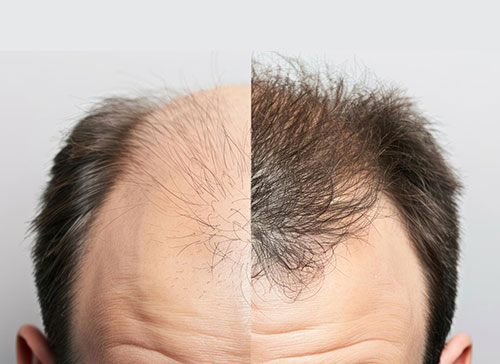
The transplanted follicles continue to grow naturally in their new location, providing permanent and natural-looking results. Since the patient's own hair follicles are used, the new hair blends seamlessly with existing hair.
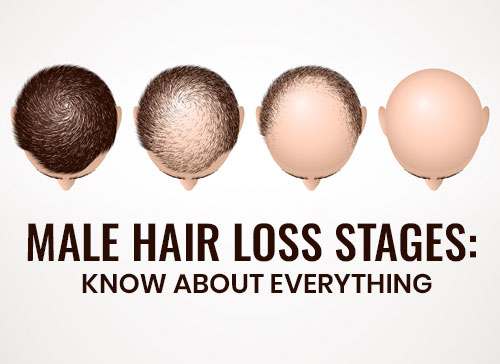
Hair transplant procedures are particularly suitable for individuals experiencing male pattern baldness, receding hairlines, thinning crowns, and certain cases of hair loss caused by injury or scarring.
Choosing the right hair restoration solution depends on your hair loss pattern, scalp condition, lifestyle, and long-term goals. Book a personalized consultation with our experienced hair restoration specialist to understand whether a hair transplant or a hair patch is the best option for you and receive honest, expert recommendations.
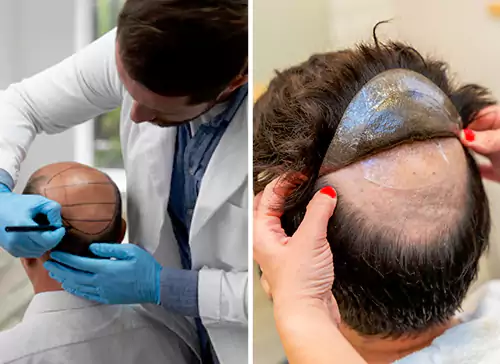
A hair patch, also known as a hair replacement system or non-surgical hair restoration solution, involves attaching a customized hairpiece to the scalp using adhesives, tapes, or clips.
Hair patches are designed to match the individual's hair color, density, and texture, creating an instant appearance of fuller hair.
Unlike hair transplantation, a hair patch does not stimulate natural hair growth. Instead, it acts as an external cosmetic solution that conceals bald areas.
Hair patches can be suitable for individuals who:
Although modern hair systems have become more realistic than ever, they require regular maintenance and periodic replacement to maintain their appearance.
| Factor | Hair Transplant | Hair Patch |
|---|---|---|
| Procedure | Surgical | Non-surgical |
| Results | Permanent | Temporary |
| Appearance | Natural hair growth | Artificial hair system |
| Maintenance | Minimal | Regular upkeep required |
| Recovery | Few days | No downtime |
| Longevity | Long-term | Requires periodic replacement |
| Styling Freedom | Complete freedom to wash, cut, and style | Limited in certain situations |
One of the biggest differences between a hair transplant vs hair patch lies in permanence. A transplant restores growing hair, while a patch simply covers hair loss.
1. Permanent Results: One of the biggest advantages of a hair transplant is its long-term nature. After the transplanted follicles settle into the scalp, they continue to grow naturally for many years.
2. Natural Appearance: Because your own hair follicles are used, the results appear natural and blend seamlessly with existing hair.
3. Freedom to Style Hair: Transplanted hair can be cut, colored, washed, and styled just like natural hair.
4. Low Maintenance: Unlike hair patches, there is no need for regular reattachment or replacement sessions.
5. Increased Confidence: Permanent hair restoration can significantly improve self-confidence and overall self-esteem.
6. Cost-Effective Over Time: Although the initial investment may be higher, the absence of recurring maintenance expenses often makes hair transplantation more economical in the long run.
1. Immediate Results: Hair patches provide instant transformation without waiting several months for hair growth.
2. Non-Surgical Procedure: The procedure does not involve any incisions, stitches, or recovery time.
3. Suitable for Extensive Baldness: Individuals with insufficient donor hair may find hair patches to be a practical option.
4. Lower Initial Cost: Hair patches generally involve lower upfront expenses compared to hair transplantation.
5. Painless Procedure: The process is simple, painless, and does not require any surgical intervention.
Choosing between a hair transplant and a hair patch is not just about restoring hair—it's about selecting a solution that aligns with your lifestyle, expectations, and long-term goals. Before choosing a hair restoration solution, it is important to evaluate the following factors:
The extent and pattern of hair loss play a major role in determining the right treatment. Individuals with mild to moderate baldness and sufficient donor hair are often good candidates for hair transplantation, while those with extensive baldness may initially explore non-surgical options.
Consider whether you prefer immediate cosmetic enhancement or a long-term hair restoration solution. A hair patch can provide immediate coverage, whereas a hair transplant requires patience but offers long-lasting and natural hair growth.
Hair patches require regular maintenance, cleaning sessions, and periodic replacements. If you prefer a low-maintenance lifestyle and do not want frequent salon visits, a permanent solution such as a hair transplant may be more suitable.
Your daily routine also matters. Individuals who frequently travel, swim, exercise, or participate in outdoor activities often prefer permanent hair restoration because it provides greater freedom and convenience without concerns about adhesives or hair system maintenance.
While a hair patch may appear more affordable initially, recurring maintenance costs can add up significantly over the years. Evaluating both short-term and long-term expenses is important before making a decision.
Consider the type of results you expect. Many individuals prefer a hair transplant because it allows natural hair growth, unrestricted styling, and long-term confidence. Those seeking immediate but temporary enhancement may opt for a hair patch.
Hair loss often continues with age. Therefore, choosing a treatment that can accommodate future changes is essential. A personalized consultation with an experienced specialist can help develop a long-term hair restoration strategy that delivers natural and sustainable results.
Ultimately, the ideal choice depends on your individual needs, expectations, and long-term goals. Consulting a qualified hair restoration expert can help you make an informed decision and choose the most suitable treatment for lasting satisfaction.
When comparing hair transplant vs hair patch, cost is often a major deciding factor.
Hair transplantation generally involves a higher initial investment due to the expertise, advanced technology, and surgical procedure involved. In India, the cost of a hair transplant typically ranges from ₹40,000 to ₹2,50,000 or more, depending on the extent of hair loss and the number of grafts required.
Hair patches, on the other hand, usually have a lower upfront cost, generally ranging between ₹10,000 and ₹50,000. However, they require ongoing expenses for maintenance, cleaning, adhesive replacement, and periodic replacement of the hair system.
Most hair patch users require servicing every 3-6 weeks, and annual maintenance costs can range from ₹20,000 to ₹60,000 or more. Over a period of 5-7 years, the cumulative cost of maintaining a hair patch may become comparable to or even exceed the cost of a permanent hair transplant.
| Treatment | Initial Cost | Long-Term Cost |
|---|---|---|
| Hair Transplant | ₹40,000 - ₹2,50,000+ | Minimal maintenance costs |
| Hair Patch | ₹10,000 - ₹50,000 | ₹1,00,000 - ₹3,00,000+ over several years |
Therefore, while a hair patch may appear more affordable initially, a hair transplant often offers better long-term value due to its permanent results and lower maintenance requirements.
Note: Prices mentioned above are indicative and may vary depending on individual requirements, clinic expertise, treatment techniques, and maintenance needs. Actual costs may differ from patient to patient.
Related: Cost of Hair Transplant in Delhi - Complete Detailed Guide
The right treatment depends entirely on your individual needs and expectations.
A hair transplant can be an ideal option for individuals who:
A hair patch may be suitable if you:
Consulting an experienced hair restoration specialist is essential to determine the most appropriate treatment for your specific condition.
Although both treatments can improve appearance, hair transplantation is frequently considered the preferred long-term solution.
For individuals seeking a lasting solution to hair loss, modern hair transplantation techniques continue to be among the most effective and preferred treatments worldwide.
Selecting the right clinic is equally important as choosing the appropriate hair restoration treatment.
For individuals seeking a Hair transplant in Delhi, Resplendent Cosmetic Studio is committed to providing advanced hair restoration solutions tailored to individual needs. The clinic focuses on personalized treatment plans and modern techniques to help patients achieve natural-looking and long-lasting results.
At Resplendent Cosmetic Studio, the emphasis remains on delivering safe, effective, and aesthetically pleasing outcomes that help patients regain confidence.
The debate surrounding hair transplant vs hair patch ultimately comes down to personal goals, lifestyle, and expectations.
Hair patches offer immediate cosmetic enhancement and may be beneficial for individuals seeking a non-surgical option. However, they require continuous maintenance and do not provide actual hair growth.
Hair transplantation, on the other hand, offers a permanent, natural-looking, and low-maintenance solution for suitable candidates. Its ability to restore growing hair and deliver long-term results has made it one of the most preferred hair restoration treatments worldwide.
If you are considering treatment for hair loss, consulting experienced specialists at Resplendent Cosmetic Studio can help you understand your options and develop a personalized treatment plan that aligns with your long-term hair restoration goals.
Don’t Miss: How Long Does a Hair Transplant Last?
R-9 , Basement, Greater Kailash Part 1,
New Delhi -110048.
Copyright - All Rights reserved © Resplendent Cosmetics
Powered by ITPL